Why fatigue can persist, despite good sleep habits
You sleep for eight hours and are still exhausted. You drink less coffee, eat healthier, and reduce stress where possible, but the tiredness remains. Many people in Europe recognize this.
The cause sometimes lies at a biological level, for example, in how efficiently your cells produce energy, whether key nutrients are sufficiently available, and how your body maintains its oxidative balance.
Below, we discuss five biological factors that research has linked to low energy and persistent fatigue.
Five biological factors associated with low energy
1. Mitochondria and energy production in your cells
Mitochondria are the powerhouses in almost every cell in the body. They convert nutrients into ATP: the molecule that fuels all cellular activity. Research links less efficient mitochondrial function to persistent fatigue as one of several potential factors.
Coenzyme Q10 is a substance that occurs naturally in the body and is involved in energy production in the mitochondria. It is also found in foods such as meat and fish.
2. Iron and normal oxygen transport
Iron contributes to normal oxygen transport in the body and to the reduction of tiredness and fatigue.
Iron is required for the production of hemoglobin: the protein in red blood cells that transports oxygen throughout the body. If you do not get enough iron, oxygen transport can suffer as a result. According to the WHO, iron deficiency is one of the most common nutritional problems worldwide, especially in women of childbearing age.
3. A stable blood sugar level
The regulation of your blood sugar level plays a role in how evenly your energy is distributed throughout the day. Meals high in fast-acting carbohydrates can cause blood sugar to fluctuate rapidly, which some people experience as an energy dip, especially in the afternoon.
4. Magnesium and energy metabolism
Magnesium contributes to normal energy-yielding metabolism and to the reduction of tiredness and fatigue.
Magnesium is involved in more than 300 enzymatic processes in the body, including processes related to normal energy metabolism. European food consumption surveys show that a significant portion of adults consume less magnesium than is recommended.
5. Oxidative balance
The body constantly produces free radicals as a natural byproduct of metabolism. Antioxidants, including vitamin C and glutathione, play a role in maintaining oxidative balance.
Vitamin C contributes to the reduction of tiredness and fatigue and to normal energy-yielding metabolism.
The absorption gap: why supplements sometimes disappoint
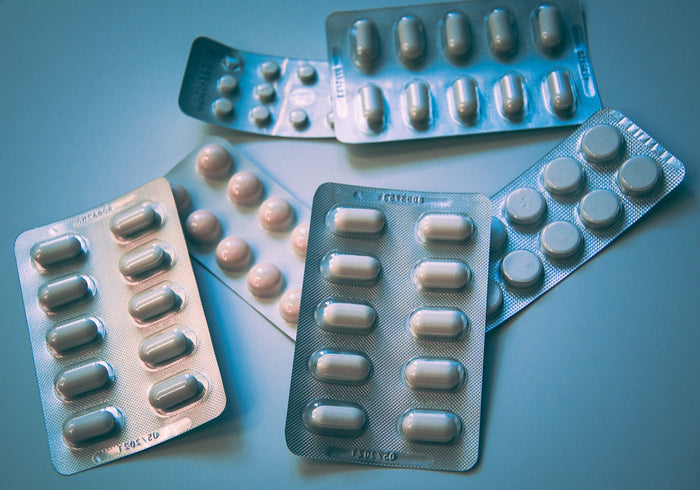
Many people use supplements for the areas mentioned above and yet notice little difference. A key reason for this is bioavailability: the portion of an active ingredient that actually reaches the bloodstream.
Regular tablets and capsules must pass through stomach acid, digestive enzymes, and the intestinal wall before entering the bloodstream. Along the way, a portion of many active substances is broken down or not absorbed. The dose on the label and the amount that is actually absorbed can therefore differ significantly.
The liposomal difference
A liposome is a microscopic sphere made of the same phospholipids that compose your cell membranes. The active ingredient is contained within this sphere, which is designed to protect it during digestion. In a clinical study (CT-0007-17, n=24), liposomal vitamin C demonstrated 1.76× higher bioavailability than regular vitamin C at the same dosage.
Liposomal delivery is also interesting for substances like glutathione, which is poorly absorbed in its standard oral form, and coenzyme Q10: a large, fat-soluble molecule.
The PPH standard: dry liposomal technology
Plant Physiology Health uses a dry powder form instead of a liquid. This is less sensitive to oxidation than liquid liposomal products and requires no preservatives.
- Certified production Made in an FSSC 22000-certified production environment in the Netherlands, independently audited by Kiwa Nederland B.V.
- No preservatives Stable dry form, shelf-stable for 36 months without refrigeration
- Plant-based capsule HPMC, suitable for vegans. Sunflower lecithin (GMO-free) in all products, except coenzyme Q10: which contains soy lecithin.
- Quality control Each production batch is checked for quality before release
Conclusion
Persistent fatigue despite sufficient sleep is common and can have multiple biological causes. Understanding these factors is a first step.
Iron contributes to normal oxygen transport in the body. Magnesium contributes to normal energy-yielding metabolism. Vitamin C contributes to the reduction of tiredness and fatigue. These are health claims approved by the European Commission, based on an assessment by the European Food Safety Authority (EFSA).
View the full PPH range and find the formula that suits you.
Because your vitality isn't optional — it's essential.
Frequently Asked Questions
Sources
- European Food Safety Authority (EFSA). Authorised EU health claims for iron, magnesium, and vitamin C. ec.europa.eu/food/safety/labelling-nutrition/nut
- CureSupport Nederland B.V. (2017). Bioavailability Study of Liposomal Vitamin C. Study No: CT-0007-17. Conducted by Bio Agile Therapeut.
- Missailidis, D. et al. (2020). An Isolated Complex V Inefficiency and Dysregulated Mitochondrial Function in Immortalized Lymphocytes from ME/CFS Patients. International Journal of Molecular Sciences. www.ncbi.nlm.nih.gov/pmc/articles/PMC7504519/
- World Health Organization (2021). Anaemia. WHO Global Health Observatory. www.who.int/
- Gröber, U. et al. (2015). Magnesium in Prevention and Therapy. Nutrients. www.ncbi.nlm.nih.gov/pmc/articles/PMC4586582/
- Richie, J.P. et al. (2015). Randomised controlled trial of oral glutathione supplementation on body stores of glutathione. European Journal of Nutrition. pubmed.ncbi.nlm.nih.gov/25921684/