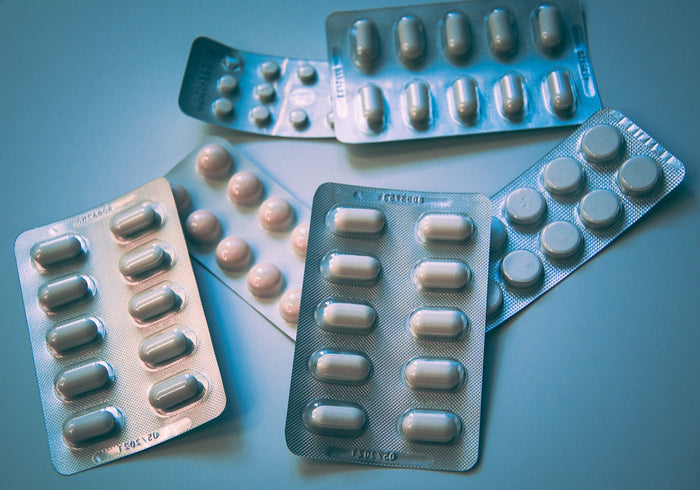

Why an iron deficiency is so easily overlooked
When thinking about an iron deficiency, most people imagine someone who is pale, quickly short of breath, and visibly weakened. That is iron-deficiency anemia — the final stage of a process that usually takes months to years. By that time, the body has long been running on empty reserves.
The early stages are much more subtle, and much more common. Complaints regarding energy, concentration, mood, and resilience are easily attributed to stress, poor sleep, or a busy period. Many people go through life for years with iron levels that are too low without knowing it.
The 8 signals that are often missed
1. Persistent fatigue and low stamina
Iron is indispensable for hemoglobin, the protein in red blood cells that transports oxygen. With too little iron, every cell receives less oxygen. The result is a specific, heavy fatigue that does not disappear after resting.
2. Difficulty concentrating and brain fog
Your brain uses 20% of all oxygen in your body. When iron levels are low, your cognitive performance declines — including working memory, processing speed, and attention. Research has shown that iron supplementation in women with a deficiency clearly improved cognitive performance within 16 weeks.
3. Cold hands and feet
Due to the reduced efficiency of red blood cells, your extremities suffer first. If your hands and feet are structurally cold, even in mild temperatures, it is worth having your ferritin measured.
4. Restless Legs Syndrome
There is a well-documented link between low ferritin and restless legs syndrome — that unpleasant urge to move your legs, especially in the evening. Iron plays a role in the regulation of dopamine, and a deficiency disrupts that system. Many people notice significant improvement as soon as their iron levels have been restored.
5. Brittle nails and hair loss
Iron is needed for the production of keratin, the structural protein of hair and nails. Spoon-shaped nails and diffuse thinning hair are classic signs of a long-term deficiency. These changes are reversible with appropriate supplementation.
6. More frequent infections
Iron is essential for the proper functioning of immune cells. A deficiency weakens the immune system and can make you more susceptible to recurrent respiratory infections and slower healing of wounds.
7. Headaches
Less iron means less oxygen to the brain, which can trigger vasodilation and headaches. Women with an iron deficiency report chronic or recurrent headaches more often.
8. Pale eyelid lining and gums
Pull your lower eyelid down — the inner edge should be a healthy reddish-pink. A pale, washed-out color indicates low hemoglobin. Pale gums can indicate the same. It is not a definitive test, but it is a good starting point for a conversation with your GP.
Who is most at risk
- Women of childbearing age menstrual blood loss regularly depletes iron stores. The WHO estimates that 30% of non-pregnant women worldwide have an iron deficiency.
- Pregnant women the need for iron increases sharply during pregnancy — by approximately 50% in the third trimester.
- Endurance athletes running causes the breakdown of red blood cells in the feet and additional iron loss through sweat.
- Vegetarians and vegans plant-based iron is absorbed much less efficiently than iron from animal sources; absorption can be as low as 1 to 7%.
- People with intestinal issues celiac disease, Crohn’s disease, and low stomach acid production hinder the absorption of iron in the small intestine.
Why regular iron supplements are so often abandoned
Regular iron supplements — especially ferrous sulfate — are known for their gastrointestinal complaints. Nausea, constipation, cramps, and dark stools affect up to 70% of users and are the main reason people stop before their reserves are replenished.
The cause is simple: high doses of non-encapsulated iron react directly with the intestinal wall, causing local irritation and oxidative damage. The usual solution — taking less iron — reduces the complaints, but also the effect.
The difference with liposomal iron
With liposomal iron, elemental iron is encapsulated in a phospholipid bilayer before it reaches the digestive system. It is only released in the intestinal cells via endocytosis, thereby bypassing the site where reactive iron causes damage.
Clinical research in Nutrients (2019) found that liposomal iron provided a similar increase in ferritin levels as regular ferrous sulfate at a lower dosage, with significantly fewer gastrointestinal complaints.
The PPH standard
- 17 mg of elemental iron per capsule (121% of the EU reference intake)
- Ferrous fumarate — one of the most absorbable forms
- Ascorbic acid as an antioxidant
- Sunflower lecithin (GMO-free) — no soy
Conclusion and next step
Iron deficiency is the most common nutritional deficiency in Europe — and the least recognized. If you recognize three or more of the above signals, a simple blood test (ferritin, serum iron, and transferrin saturation) will provide clarity within a few days.
Because your vitality is not optional — it is essential.
Frequently asked questions
Sources
- WHO (2021). Anaemia. Global Health Observatory. www.who.int/
- Murray-Kolb, L.E. & Beard, J.L. (2007). Iron treatment normalizes cognitive functioning in young women. American Journal of Clinical Nutrition. pubmed.ncbi.nlm.nih.gov/17344487/
- Allen, R.P. et al. (2013). Restless Legs Syndrome and iron deficiency. Sleep Medicine Reviews. pubmed.ncbi.nlm.nih.gov/22648472/
- Piskin, E. et al. (2022). Iron absorption: Factors, limitations, and improvement methods. ACS Omega. pubmed.ncbi.nlm.nih.gov/35647927/