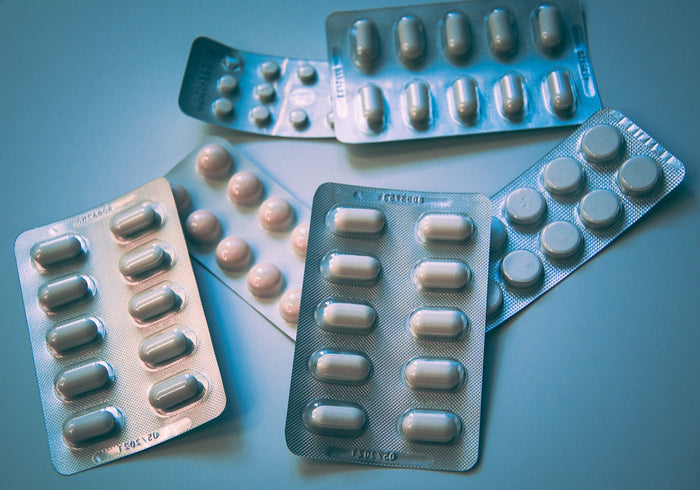

Melatonin: a signal, not a sedative
For many people, melatonin is the first supplement that comes to mind when they sleep poorly. But melatonin is primarily a time signal: the hormone tells your body that it is nighttime. It is not a remedy that calms a busy mind.
Many people sleep poorly because their nervous system is still 'on' in the evening due to stress, worrying, caffeine, or an irregular rhythm. To understand what is going on, it helps to look at the neurotransmitters in the brain.
What keeps you awake
Whether you are awake or asleep depends partly on the balance between excitatory and inhibitory signals in the brain. GABA (gamma-aminobutyric acid) is the main inhibitory neurotransmitter of the central nervous system: it reduces the excitability of nerve cells. Stress, caffeine, and an irregular sleep rhythm can shift the balance towards 'on'.
GABA and L-theanine: what has been studied?
GABA is being studied as a dietary supplement, including in a 2018 study (Byun et al., Nutrients) among adults with sleep problems. L-theanine is an amino acid from green tea that is associated with alpha brain waves, the pattern linked to relaxed alertness. A 2019 study (Kim et al.) investigated the combination of GABA and L-theanine.
For GABA, L-theanine, ashwagandha, chamomile, lemon balm, and Montmorency cherry, there is no EFSA-approved health claim under EU Regulation 1924/2006. The studies refer to specific products and dosages and are not a promise regarding the effect of a supplement.
The foundation: healthy sleep habits
- Consistent rhythm Go to bed and wake up at the same times, even on weekends
- Caffeine Do not drink coffee, cola, or energy drinks after the afternoon
- Light Seek out daylight during the day and limit bright light and screens in the evening
- Relaxation Establish a regular evening ritual, such as reading, a walk, or breathing exercises
The PPH formula
- GABA 250 mg
- Ashwagandha KSM-66 100 mg
- Chamomile extract 100 mg
- Montmorency cherry extract 70 mg
- Lemon balm extract 50 mg
- L-theanine 50 mg
- Folate 400 µg (as 5-methylfolate)
Folate contributes to normal psychological function and to the reduction of tiredness and fatigue.
One capsule per day, 30 to 60 minutes before bedtime. Without melatonin. Do not exceed the recommended daily dosage.
Conclusion
Melatonin is primarily a time signal. For many people who sleep poorly, stress and an active nervous system play a larger role. Good sleep habits are therefore always the foundation. If you sleep poorly for a long time, visit your GP.
View PPH GABA + Ashwagandha KSM-66.
Your vitality is not optional — it is essential.
Frequently asked questions
Sources
- Byun, J.I. et al. (2018). Safety and Efficacy of GABA from Fermented Rice Germ in Patients with Insomnia. Nutrients. pubmed.ncbi.nlm.nih.gov/30257176/
- Kim, S. et al. (2019). GABA and L-theanine mixture decreases sleep latency and improves NREM sleep. Food Science & Biotechnology. pubmed.ncbi.nlm.nih.gov/31007774/
- Pratte, M.A. et al. (2014). Ashwagandha for Anxiety: A Systematic Review. Journal of Alternative and Complementary Medicine. pubmed.ncbi.nlm.nih.gov/25211657/
- Howatson, G. et al. (2012). Effect of tart cherry juice on melatonin levels and enhanced sleep quality. European Journal of Nutrition. pubmed.ncbi.nlm.nih.gov/21901389/